
"Sacred"
Is there still a space called holy?

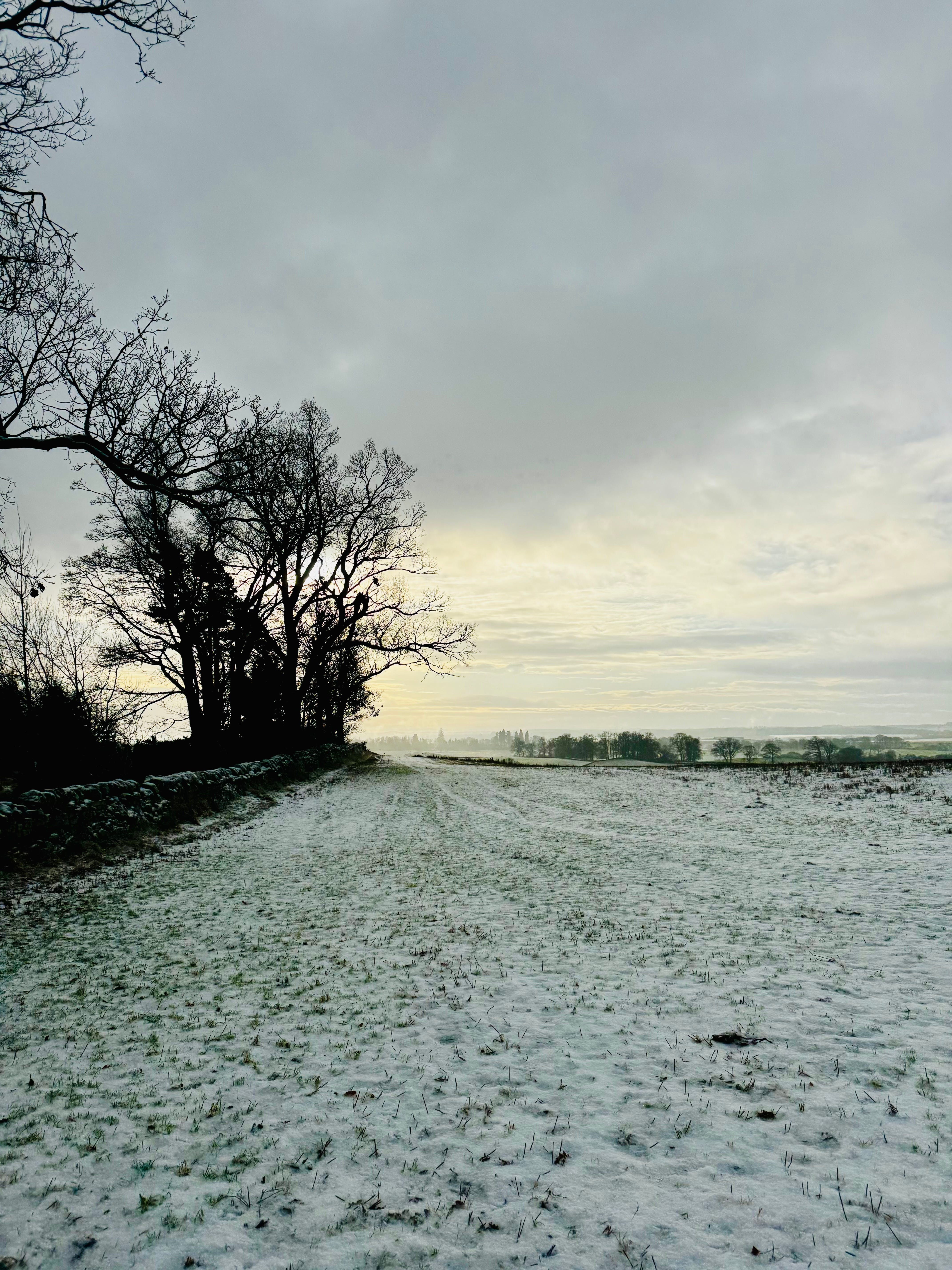
This week, I participated in a rather deep discussion about Wendell Berry’s poem How to Be a Poet,1 and Malcolm Guite’s Singing Bowl.2 I’m really not entirely sure how these two poems got paired together for that conversation, but as I love them both, I was only too pleased to share my thoughts on them.
It is really amazing to me how closely these two poems actually resemble each other. Go Google a copy of both of them and read through them -- I’ll wait.
Well, what did you think? They both weave through so many of the same layers, ideas and thoughts, don’t they? One of the main layers that jumped out to me, which they have in common, is breathing. Did you notice it? Berry talks about breathing the “unconditional breath/ the unconditioned air,” and Guite also writes about pausing and beginning with “the very breath you breath now.” This is perhaps an obvious layer, but I loved that during the course of our conversation last week, we delved a bit deeper into these two brilliant poems.
We chatted about what Wendell Berry meant by shunning the electric wire, living far away from screens, and staying away from anything that obscured the place it is in. What does that look like in our day and age, and how do we live in this age of technology responsibly and well? Does he actually mean to throw away all of our phones and crack our laptop screens and go live in the wilderness? Perhaps.
And what about Guite’s line in there about remaining in the world and calling nothing common good? Is he disagreeing with Berry’s theology of material things and of place? We talked around and around on this one, because at first glance, yes, it does seem like they might not be in total agreement. One of them seems to be saying it is best to completely abandon all the things of the world, and the other is urging the reader to live in the midst of the very same world. Why the tension?
The thing that I was not expecting was for some of my fellow conversationalists to have very different ideas than me on the meaning behind these two exquisite poems —A couple of my friends were happy enough to sit in the tension and settle for the answer that Wendell Berry and Malcolm Guite had two totally different ideas of what is good, true and right. Somehow, though, that answer was not completely satisfactory to me, and so I kept on turning the poet’s words over in my head, still looking for another layer in both beautiful poems. And I also wrote a poem.
Our poetry conversation had not quite wrapped up, but so many of these thoughts were boiling to the surface, and so I sat in a corner and scribbled them down for later. I came to the conclusion that both of these master poets do indeed have the same (or at least, quite similar) ideas on how to be an artist in the world, but not of this world and how to live in the midst of the sacred and desecrated. In fact, I’d like to suggest that their ideas are actually some of the best because they mirror Jesus’s own words on the subject.
In one of my favourite chapters, John 17, Jesus prays to the Father and asks that the disciples be kept in truth, despite being “in the world.” Here’s what He says:
“I am coming to you now, but I say these things while I am still in the world, so that they may have the full measure of my joy within them. I have given them your word, and the world has hated them, for they are not of the world any more than I am of the world. My prayer is not that you take them out of the world but that you protect them from the evil one. They are not of the world, even as I am not of it. Sanctify them by the truth; your word is truth. As you sent me into the world, I have sent them into the world. For them I sanctify myself, that they too may be truly sanctified.”
Seems like Guite and Berry are in agreement with Jesus’s thoughts on the subject. Jesus doesn’t say screens, or electric wires, or singing bowls, for that matter, are bad, but He does quite clearly state that His disciples are not of the world, and He does talk about resisting temptations and about stewarding our time and abilities well.
He beautifully holds both sides of this question, and then He simply prays that His people would be sanctified by the Father’s truth. In truth, we are then able to see the world, ourselves, and our art so clearly. If we have been sanctified by Truth Himself, then we need only listen to His leading as we live, love and create in the world, in the sacred and desecrated parts.
So, it would seem that perhaps both poets are grappling with these questions and trying to make sense of the relationship between art, specifically writing, and the world we live in. Where is the truth in this age? Is there a clear-cut answer on how to steward our calling well, and how to not be distracted and caught up in the demands, pleasures, and distractions of “the world of which you’re made”?
How to serve the work and yet remain faithful to the Creator? First, be sanctified by Truth. Then I would humbly suggest you do exactly as Wendell Berry and Malcolm Guite have written: Remain in the world, listen to it, communicate slowly, sit down, stay with the music, call nothing common, stay away from anything that obscures the place it is in, accept it all and let it be for good.
Sacred

I.
Berry and Guite, two masters;
Their poems held in tension.
The sacred and the possibility of something
Unsacred.
And yet still writing amidst the darkness
Does the light have to be on
To see the world so clearly?

II.
Is one of them living in stories only --
A poet, and by day a farmer still?
Does the other believe
In any desecrated places, or is it
Just a holiday and we’re made
To splash beauty and frolic about?
Can you feel the tension in your
Soul – is there still a space called
holy?

III.
Shall we throw out the world and
Then see life – in poem and prose – so clearly,
Or is there a holy tension between
What the world calls good and what
Words we spin in the midst of the
(un)sacred.

IV.
Is everything evil, or can we breath out
And catch our breath in ink
Watching the words begin to rise –
Beauty breaks throughout the novel
World, in the midst of the unsacred, desecrated.
Could there perhaps be an act of something
Sacred
In our creations.

V.
An act of war, of resistance against
The powers that be, the ones that desecrate
Space and us in this world.
Do these masters need to be in tension
Or are they actually in agreement?
Into the unsacred areas of life,
Remain within the world.
And write: it’s
Sacred.
Life Musings:
Life this week has been a lot of breathing out and catching my breath in ink amidst rainy, grey, winter days and a whole lot of art.


Thank you for reading!!
Until next time —
Elsie x
There are no unsacred places; there are only sacred places and desecrated places. - Wendell Berry

Loved your reflections, insight and goodness…you brought up my most favorite chapter in the Bible, John 17. And THAT …His words… are what so often surfaces when i
“Accept what comes from silence”.
Beautiful poem Elsie!!!
Oh Elsie, this was such a joy to read. I especially loved stanza IV in your poem at the end—I’ve been thinking about that all week 💕