

Robotic Missionaries?
An author interview with Billy Coppedge

Hey!! Today I’m mixing it up and doing something I’ve never done on Barefoot Kid before, and hosting a special author interview. I’m excited!
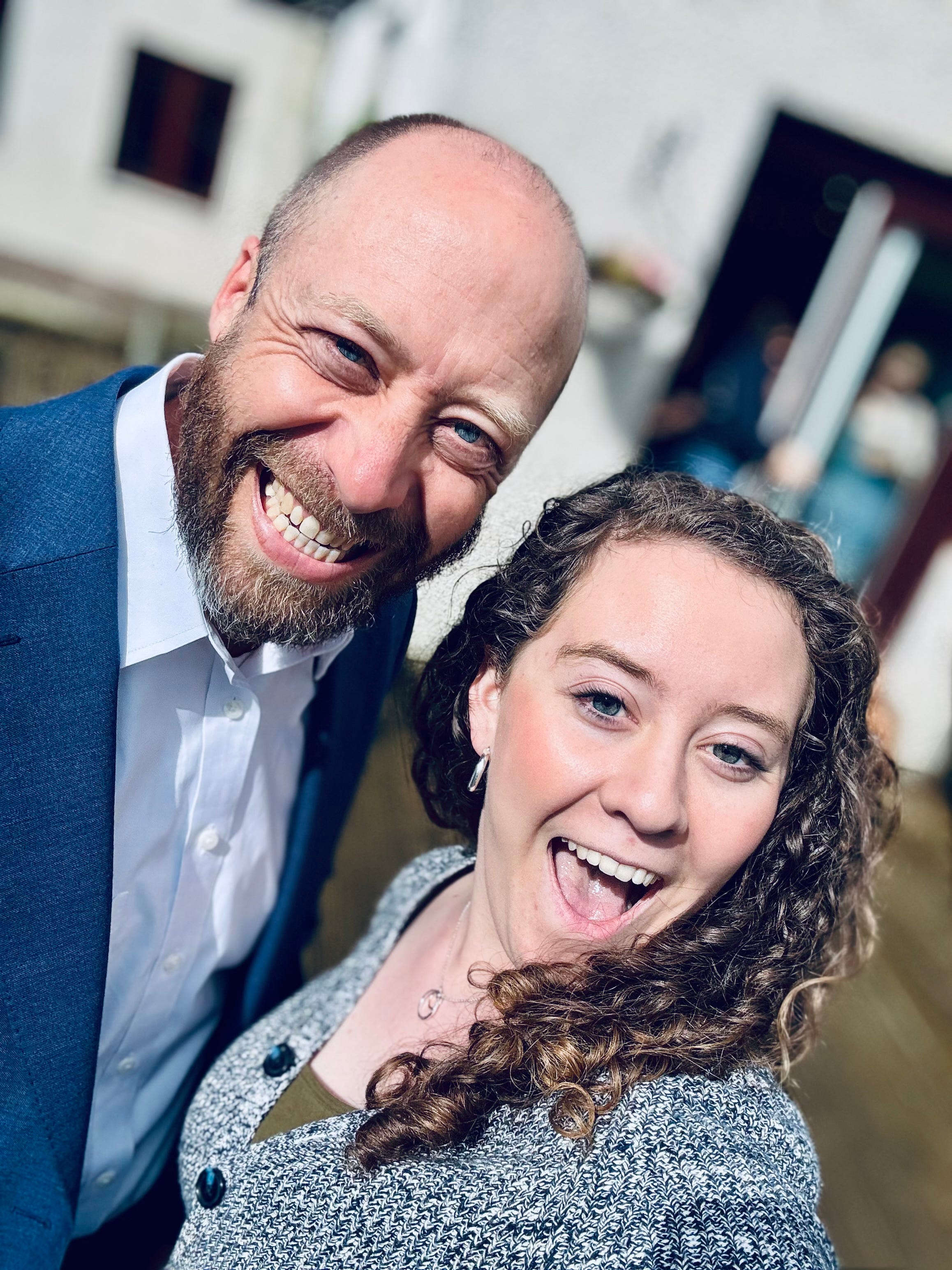
For those of you who don’t know him, allow me to introduce our guest! Billy Coppedge is a storyteller, teacher, adventurer, PhD, author, and (most importantly) my dad. He has lived all over the world, training and equipping people with skills to engage Scripture through oral Bible storytelling, and I’m definitely not biased in the least, but he’s a legend. Today, we are going to be chatting about his book, which will be published in mid-August!
Thank you so much for being willing to do this, Dad! To get us started, can you tell us the name of your book and a little bit about it?
Thank you for welcoming me to Barefoot Kid, Elsie. I am honoured to be here. Some time ago, I began to write a story about a hypothetical mission organisation and its leadership struggling to know how to embrace tech developments such as AI and other robotic technologies. One story led to another, and soon I had a loose collection of stories exploring the intersection of Christian missions and AI. The name of the book is I, Missionary: Reimagining Missions in an AI World. Some of your audience may recognise the not-so-subtle reference to novelist Isaac Asimov’s I, Robot.
Would you be willing to share the heart and motivation behind this story? Was there something specifically that prompted such a unique narrative perspective on AI and missions?
The heart and motivation behind I, Missionary is curiosity. I became curious about how such tech developments are indeed going to influence our current realities. As I read and listened, the people I was following were discussing the impact on areas such as politics, education, medicine, and the economy. There were a few emerging voices—now more—that were asking how AI was going to shape the Church. But no one was directly speaking about how AI would impact missions. Now, thankfully, more voices have joined that conversation, but at the time, my curiosity was piqued. What would happen if robotic technologies were wholly embraced by an org committed to making disciples throughout the world? These stories are exploring relevant issues, or some of them at least, that might emerge, such as evangelism, church planting, discipleship, member care, and funding. These are critical concerns for any mission org, and I, Missionary is probing what the deeper realities are that have to be kept in mind, even amidst the excitement and fear generated around AI possibilities.
You mentioned this briefly before with the role that Issac Asimov’s writing had on this book. Can you say more on the impact that his writing had on the ideas and inspiration of I, Missionary?
I like Asimov’s style of writing. His short story approach is valuable as it allows for exploring issues, but without getting bogged down in only one narrative plot line. Furthermore, while he may not have meant to, his stories raise all kinds of questions about machines, human persons, free will, faith, and definitions of progress. I would not ascribe to his conclusions (I understand he was an atheist or agnostic at best), but I wanted to borrow his style and approach, only repurpose it for Kingdom purposes. And here is why. Stories have a way of engaging our hearts, of appealing to the imaginative part of our being. They invite us into the situations, scenarios and characters in the plot. Stories are often chided as being a form of escapism; I want to gently push back on that. Yes, stories can be used for such things, but so can other forms or genres of communication. Nonetheless, the value and power of story is that often we can step out of our story, engage another story, being witness to the choices and consequences within, which then affords the opportunity for us to reconsider our own choices in the dramas that we are actually living. Rather than escaping from reality, narrative becomes a means to more fully, perhaps more intentionally, engage in reality.
Thus, while one could argue that I, Missionary is just a collection of fictional stories, I fear that tends towards a reductionistic understanding. It follows a hypothetical organisation that is trying to navigate scenarios that could easily unfold in an actual mission org in the next few years.
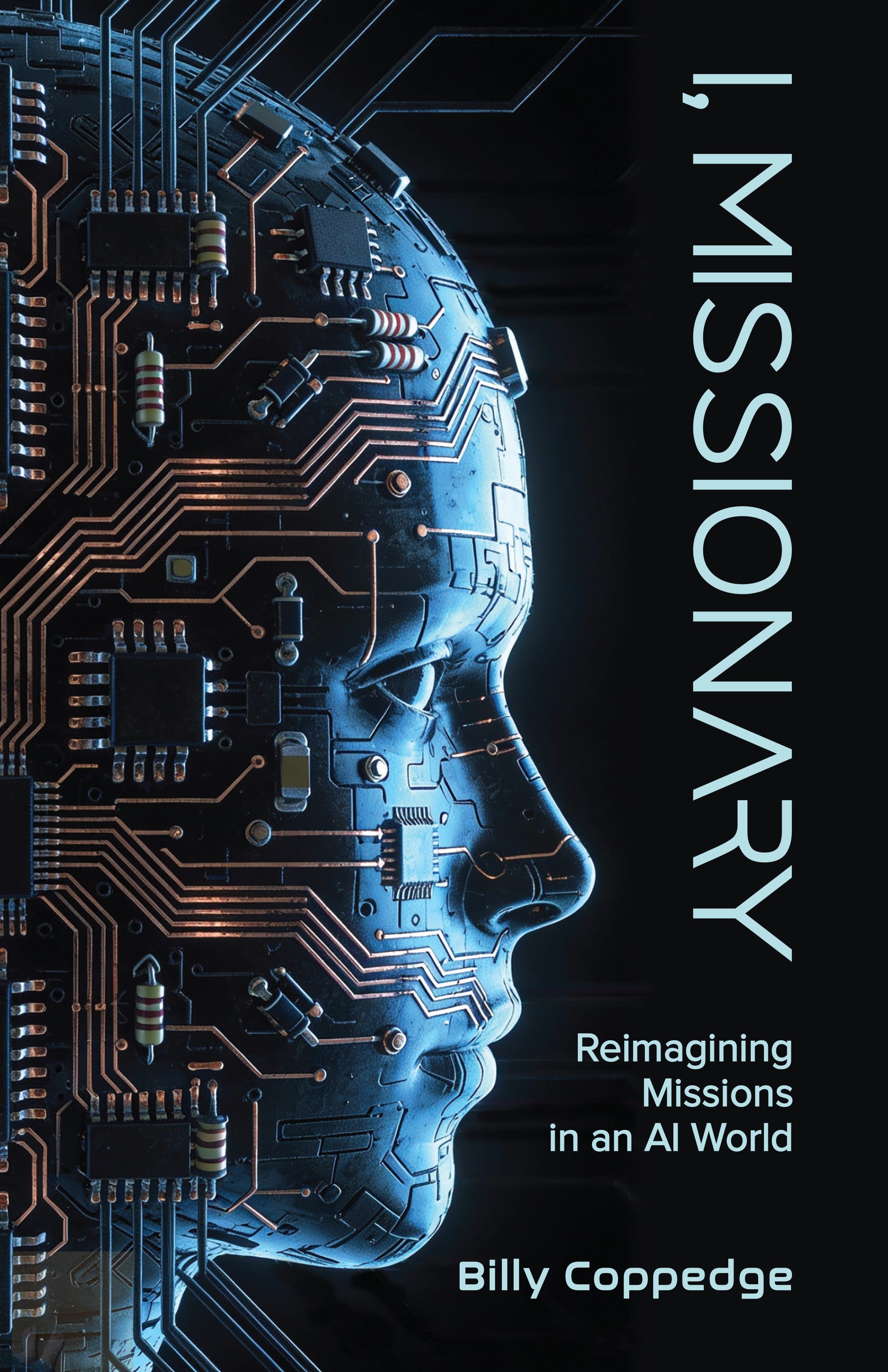
Moving on a little bit to the actual writing side of things, when did you know that the story was complete?
I came to the end. That may sound like a weak response. I do not mean it glibly. As I was working, I’d finish one short story and realised, “Oh, there is another—a follower that needs to be told.” So, I wrote the next one. When I got to the end of Rosie, no more stories came. I had reached the end of this collection. That is not completely true, as I realised it needed an afterword. But I had already written the afterword. I added it, and to my surprise, it worked. But still, there were no new stories that needed to be told in this first cache. In some ways, there is something sad about coming to the end, and in others, there is a relief. It does not answer all the questions, and I have since thought of other possible stories. However, none of those were needed in this collection.
Did the story surprise you at all, or did you know where everything was going beforehand?
Yes and no. I was surprised numerous times, perhaps in every single story, by how it unfolded in the end. Yet, I have come to realise that surprise is part of the writing process and journey. The story needs to be stewarded, and I get to be the steward; however, how it is going to develop, change, or conclude often feels like something that is beyond the steward’s control. The dynamics of I, Missionary make it a story that is quite vulnerable. What I mean by that is that we are talking about Jesus, saving souls, Scripture, making disciples, church planting, and mission strategy. These things carry a Kingdom weight to them; yet, the stories also blend in technologies—some of which are remarkable in their Kingdom purposes and some which are truly distressing. Being on the inside of that process, realising where the story was going and realising how uncomfortable it made me feel was very unsettling. That was surprising, and to follow up on that, it continues to be uncomfortable wondering how people who engage with these stories will navigate those emotions and perhaps tricky questions.
Would you say you’re more of an outliner, or do you tend to just write as you go?
I have a thought when I begin, and I go from there. I respect an outliner; however, that is not usually my style. Rather, think of it more like me mounting a feisty horse that is ready to go. I am the rider, and I hold on to the saddle horn and have the reins even as I put my foot into the stirrup and swing my leg over the horse’s back. In theory, I am supposed to be the one in charge. However, what seems to be more realistic is that while I may have some initial control over the animal, it is soon moving at a speed that I can do little about. Thus, rather than hard pulling this way or that, I am nudging the story’s head around this obstacle in the path or over that fallen limb, all the while curious myself to see where the horse will end up.
What’s your favourite piece of writing advice anyone has ever given you?
Write. Keep writing. Write more. Good writing will never happen if you don’t first begin by writing. Waiting to write until you are a good writer is a decision to not be an author.
Favourite writing snack/beverage? :)
Coffee. And a well-planned home-blended trail mix.
Did you have a favourite character to write for these stories?
My favourite character in this story was Rosie. She is a five-year-old who shows up at the end of the collection. I never saw her coming, but then she joined the story and definitely adds something to the heaviness and seriousness of the whole series that I found to be refreshing and life-giving—in rather curious ways.
You mentioned how I, Missionary is intentionally provocative to raise big questions about technology, specifically AI and robots, and their part in missions today. Can you unpack that a little more?
Thanks for asking. None of us have ever been this way before, and thus, as I mention in the Introduction, we lack proper metaphors to make sense of all that is transpiring around us. Metaphors help us make meaning of life; without them, things feel very overwhelming and distressing rather quickly.
That seems to explain many people’s reactions to AI and other such tech developments. “Oh, I hate AI” is a valid and quite common response. That is how our neurological responses are supposed to fire to keep us safe. And. Jesus has invited us to be stewards of all creation, to be fruitful, to multiply, to tend, and to bless. Thus, as we consider technologies such as AI and robotics, we have to assess, “In what ways is God inviting me to steward these new realities that are shaping not only my story and the stories around me but even the very stage upon which such stories are unfolding?”
One option is to run and hide or ignore; another is to step up and into the scary, asking God for his mind and heart in this new, uncertain world. I, Missionary is an attempt to step up and into the scary. My tech skills are elementary; I have almost no social media presence; and I am usually the last to know about cool, modern trends or practices. My natural response would be to ignore. And. I believe the stakes are high enough that to do so would be ungodly. To be a good steward, I need to engage in some way, and this was a unique way that I, as Billy, could engage. For others, stewardship will look very different.


Thank you so much. Let’s switch gears a bit and talk about your publishing journey! When and how did you decide that this book needed to be shared on a broader stage?
I wrote the first three stories and just wanted to share them with my kids. But then I realised something was happening, and when more stories kept coming, I sensed God was inviting me into something bigger. That excited me and scared me. I reached out to a publisher in the UK via a friend, and they were intrigued by the AI theme but scared of the short story approach. That seemed reasonable, as it is scary, but overall, even their response telling me no was healthy. I was sad they said no, but it was my first time, and I realised they had market reasons for why they did not want it, and I had to acknowledge those limitations. I would call it a good first rejection. I followed up with another friend, and they connected me to William Carey Publishers, who focus on mission-related literature. They had just done a mission novel by Marv Newell, a significant leader in evangelical missions, so I pitched it to them as a good follow-up to his book. The short story approach that dances on the edge of science fiction caused them to also move cautiously; however, one of their staff was an Isaac Asimov fan, and he saw what I was trying to do, and he graciously plugged it to the staff. I am very thankful for that unnamed champion! Needless to say, it will be curious how people respond to this somewhat unique blend of missions and science fiction in a short story approach.
Wow, so when I, Missionary was rejected by that major publisher, did you ever hit a moment of wanting to just abandon the project?
I touched on this above, but let me add just a little. I did sense God was inviting me on a journey. And I was unsure if it was just for me to self-publish the stories or if he had something more. I do not think I ever thought about abandoning the project; I believe the stories are significant for raising some critical questions at this junction of church history. So I did not know how it would unfold, but I did believe they would come into fruition at some level. That is curious for me to write because I can imagine someone asking, “Well, where did your confidence come from?”
That is a fair question. At some point, I realised I was finding joy in creating the stories, and I knew enough to know that such joy comes from the Creator himself. In the end, the confidence that they had a greater purpose grew out of that. Now, there was no promise of big sales or celebrity endorsements; do not misunderstand me. But there was a sense that the stories were a part of something bigger, if even only in my life. And so I kept prayerfully moving forward.
Did you consider self-publishing at all?
Of course. I think because they did feel important, even if just for me; thus, I sensed they were going to need to come into some material existence. In the end, WCP has graciously agreed to take a risk on them. If they had not, I had two other groups that I had considered contacting. However, if none had said yes, I would have given self-publishing a very serious consideration.
Thanks for being willing to talk about that side of the process. I think it’s often daunting, especially after you have completed a manuscript that you feel might actually be half-decent begin exploring options for publication, so it’s super helpful to hear about your journey and what’s worked for I, Missionary. I’m so excited that William Carey Publishing has picked it up, and I can’t wait to see where it goes from here!
Okay, as we wrap things up, let’s do a couple of random questions just for fun!
(Stealing this first one from Jonathan Rogers’ The Habit Podcast:)) Who is a writer who inspires you to write?
Ursula Le Guin. Her EarthSea Trilogy I found to be incredibly powerful. She is not a Christian (as I understand), yet she is tapping into the human condition on levels and in ways that I find to deeply resonate and be very powerful. Specifically, her mage, Ged (or Sparrowhawk), is a fascinating character, partly because the arc of his development means he comes to the place where he can “wear” his own name. So many others in her world have to go by “nicknames” to protect their true names, but Ged is grounded enough in who he is that he goes by his true name. In some ways, many artists seem to long to be established enough in their identity in God (perhaps even if they don’t know God) so that they can go by their true name. Not their version of Sparrowhawk, but by their version of Ged. This is who God created me to be. I am an artist, and I create. For purposes such as the glory of God and the good of mankind, but also because that is who I am. For me, not to create then, is for me to not be living out of my true name, who Jesus actually created me to be. So I am tweaking your question a bit, but Ged (and in some ways, Le Guin) would be two inspirations.
Do you have a favourite spot to write?
I don’t have a favourite spot, but I do like to be alone, as sometimes I’ll talk through the story aloud.
When you’re not writing, what are some things you love to do?
Hanging out with my oldest daughter!
Anything else I missed that you’d love to talk about? I’d love to hear!
Stay curious about those who are truthful about the human condition. When you find people, artists who tell the truth, you will find the Holy Spirit very close by. And Jesus loves to show up in such moments, whether planned or not, and when Jesus comes, everything changes.
Last thing, if I wanted to pre-order the book, how would I go about that? And is there any way that I, as a reader, can help promote I, Missionary before it comes out?
Thanks for wanting to read and help out! You can pre-order a copy here: https://missionbooks.org/products/i-missionary. And if you do, use the code: PRE-IMISSIONARY25, and you should get a 25% discount. As far as helping to promote the book, feel free to share this interview to help get the word out about I, Missionary. Also, after you’ve read it, if you would consider leaving an honest review on Amazon or Goodreads that would be amazing. Thank you!
Again, a huge thank you, Dad, for being willing to talk about I, Missionary and your writing process. It’s been fun! I can’t wait for the world to have access to this incredible, challenging, delightful collection of stories. Thanks for being willing to share on Barefoot Kid! Let’s do it again sometime!
Elsie x
Lovely interview!!