

On miracles
Musings on a couple of stories


I mentioned in my last post that I had the opportunity to fly out to Texas and help facilitate an Oral Bible Storytelling training, and that was a blast. It’s absolutely delightful to be immersed in the stories of Scripture for three days straight!
Throughout the course of the training, we go through many different Bible stories and work through the process of learning how to share the Word effectively with our neighbours and other people that Jesus has placed in our lives. It’s always loads of fun to guide discussions and help people discover the treasures found in the stories of Scripture in a new and beautiful way. What’s even more amazing is all of the fresh layers that I discover as I go through these familiar stories, encountering the winsome nature of the Narrative once again.
During the training, one of the stories that we learned and discussed was the miraculous episode of the widow’s jar of oil and God’s abundant provision through the prophet Elisha found in 2 Kings 4. As a group, we delved deep into the complex layers of an honour-shame culture, the lack of provision, and the heartbreaking reality of this woman who is now a widow. We discussed the humility of this unnamed widow who, in her desperation, turned to the man of God and admitted her great need. We pondered long and hard, throwing ideas and thoughts back and forth as we dug deeper into the story and found Elisha’s honest reply — “What does this have to do with me?”
There was a tiny sense of dissatisfaction amongst the group as we chatted about the choices that Elisha had when this woman came to him looking for help. We were almost disappointed that he did not give her a more “sympathetic” answer before asking her what she had in her house. We wished, for her sake, that he had paused and grieved the death of this man who “feared the Lord.” And yet. In the very next line, we see Elisha giving the woman insanely specific instructions on what to do with this problem that she has brought before him. His instructions include humbling herself further and going back to her neighbours and asking to borrow some jars.
This poor woman. She’s lost her husband, and she is on the brink of losing both of her sons as well, and now the man whom she went to as perhaps a last resort is asking her to go and borrow from her neighbours. We chatted about the cultural context of this story and the fact that this woman has, quite possibly, been borrowing from her neighbours throughout the burial process for her dead husband.
It seems like a hopeless situation, and yet in our discussions, my group was arrested by the perseverance of this widow. She went to the prophet, the one who represented God to His people, and when his instructions seemed hard and complicated, she didn’t back down. She believed that there was light at the end of the tunnel and that there was a purpose to this madness. She held onto hope in the midst of the unknown.
Maybe you know the rest of the story. This incredible woman went and did exactly as Elisha the prophet had told her, and ultimately, because of her choice to obey with reckless passion, she was a witness to the miraculous provision of the Lord for her and her family. There was a grace that was given to her because of her willingness to go and do whatever Elisha told her.
Amazingly, another story that my group learned and looked at had some fascinating parallels. The second chapter of the gospel of John relates the story of a woman coming to Jesus in desperation — there is no more wine for the wedding celebration, and Jesus’s mother comes to him with this problem. My friends immediately noticed that Jesus’s response to the issue his mum brings him is almost word-for-word what Elisha said to the widow in 2 Kings when she presents her problem, “Woman, what does this have to do with me?” Though I am familiar with both stories, I had never noticed all of the parallels, and so I was startled to pause and realise just how many overlaps there are between them.
Perhaps the most evident parallel between them is the women in both stories. We are introduced to a widow in the Old Testament story and the mother of Jesus in John. Interestingly enough, neither woman is named in these two stories. We could go down a long rabbit trail on this topic and discuss women in the Bible, and that would be valuable, but instead, let’s stay in these two stories, with these two women. One of the main treasures that my group discovered during our conversation at the training was the humble confidence of both women.
Both women had choices, and while they could have left their problems, walked away, or chosen to try and patch up a solution on their own, neither one of them chose to do that. Instead, they went in desperation, in need, in fear perhaps, and they brought their issue to the man of God in persistent hope. Both women recognised that they had come to the end of themselves, and when they did so, they both bore witness to the miraculous, abundant goodness of God. There is something incredibly freeing in coming to the end of oneself and casting yourself totally on the miraculous provision of a gracious God who has a faithful track record.
The last thing my group picked up from the overlap of the stories was the measure of all that was provided for these two women. In the first story, we find that after the widow has done all that Elisha, the man of God, said to do, she has more than enough to pay all of her debts and then live off what remains. There is now a new hope for her and her sons because of her obedience, even when it seemed crazy.
Then in John 2, we discover that when Jesus told the servants to fill the foot-washing jars with water, they didn’t just top them off — “they filled them to the brim.” Their obedience to whatever Jesus told them to do meant that there could have been puddles on the floor. The servants went above and beyond what they were required to do, and as a result, we see a family kept from certain cultural shame, Jesus’s first miracle in Cana, and the glory of God manifested in that place.
Because of the reckless obedience of these faithful women (and servants), the best is not just “yet to come” — the best is now freely available.
Life Musings:
I.
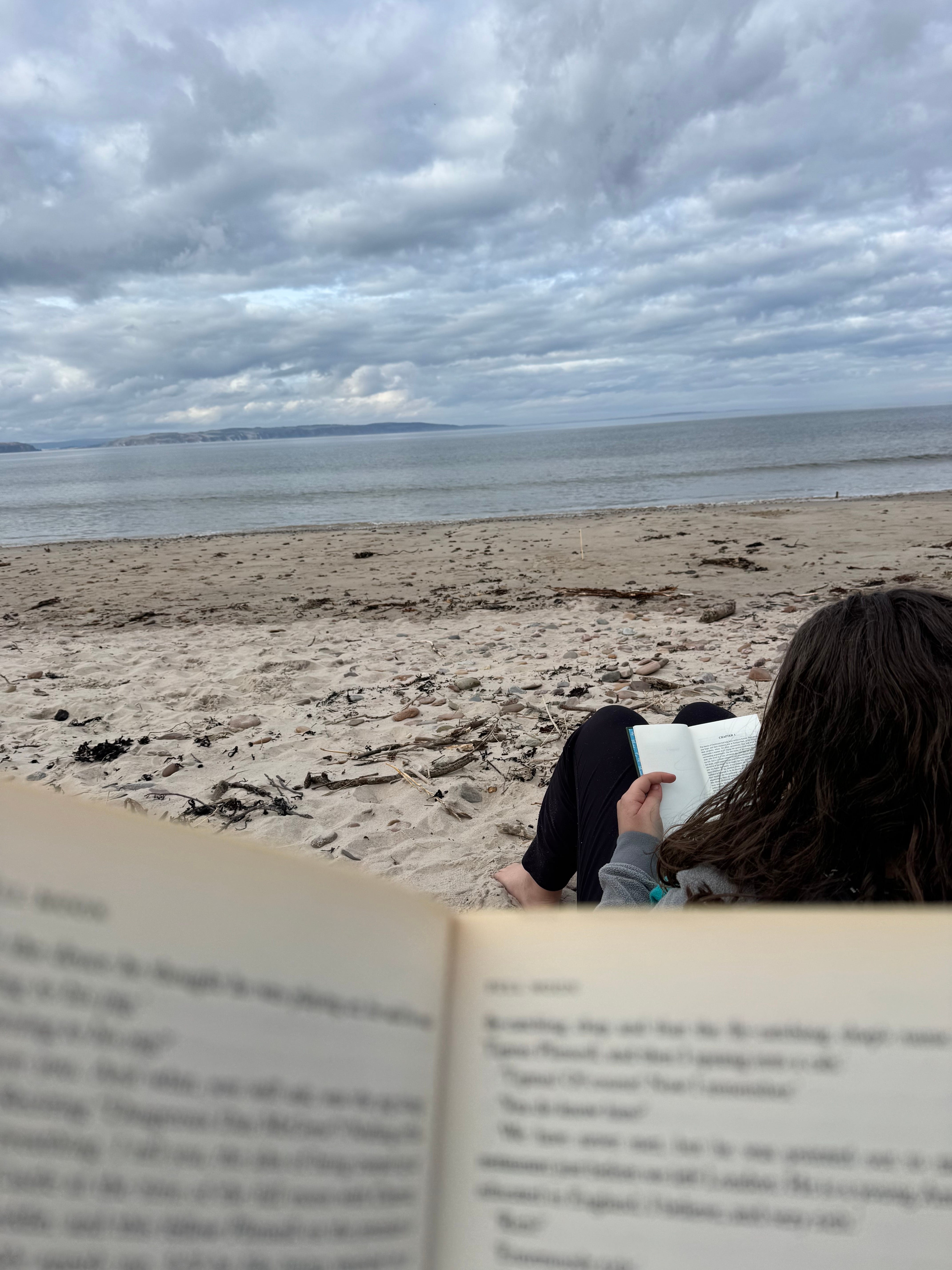
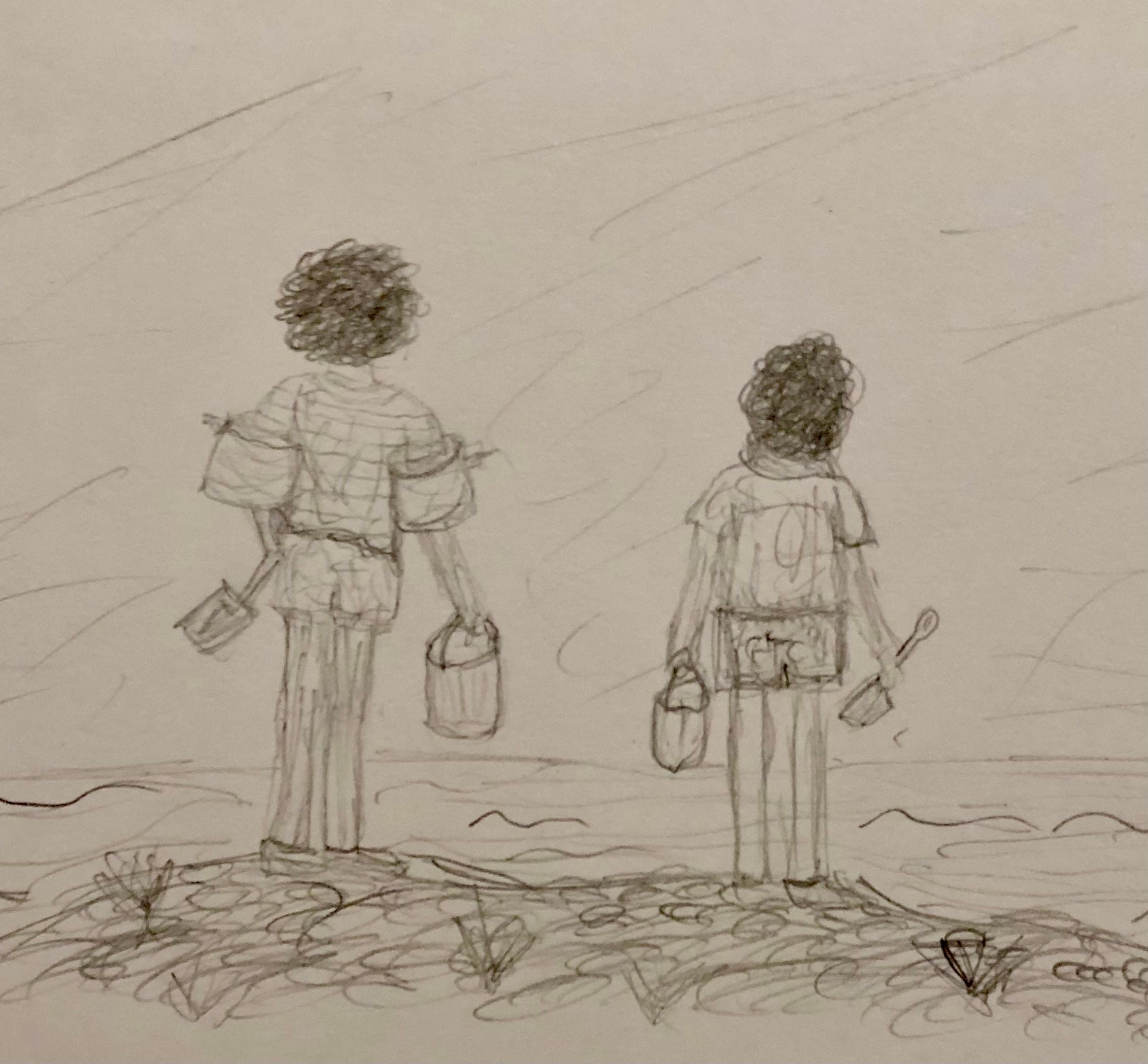
We played cricket in the sand
And I rolled up my jeans, and the cuffs filled with sand,
but there was sunshine spilling out from behind the clouds.
We’d made a day of it: our chairs, massai and tea things
all cluttered about, so sandy and happy and warm,
and we’d brought our books to read between matches
or just in case the weather turned a bit nasty.
II.
As I ran back and forth and watched them bowl
and bat and run and laugh, a song bubbled up inside and then
I felt a sort of ache, deep within my sandy soul.
Only six more months till something changes,
and I’m away down south, onto the next chapter of my adventure.
III.
It’s how the story unfolds, I suppose. I swung the bat,
thinking — you must first live the “there” bit before
The page is turned, and you catch a glimpse of the “back again” chapter.
How much life I must live, I muse to myself while taking guard,
How much I shall miss these dear old days.
IV.
We played some cricket in the sand under a sunny Scottish sky,
and I sensed a tear streak down my cheek as I looked out at the sea
and breathed in the salty air and closed my eyes on sadness and dreams
and ran expectantly back and forth, wondering what in the world
the next six months — then forever — might hold
It’s there and back again, lass.



Thanks for reading my musings, friends!
Elsie x